The base oil forms the lubricating film
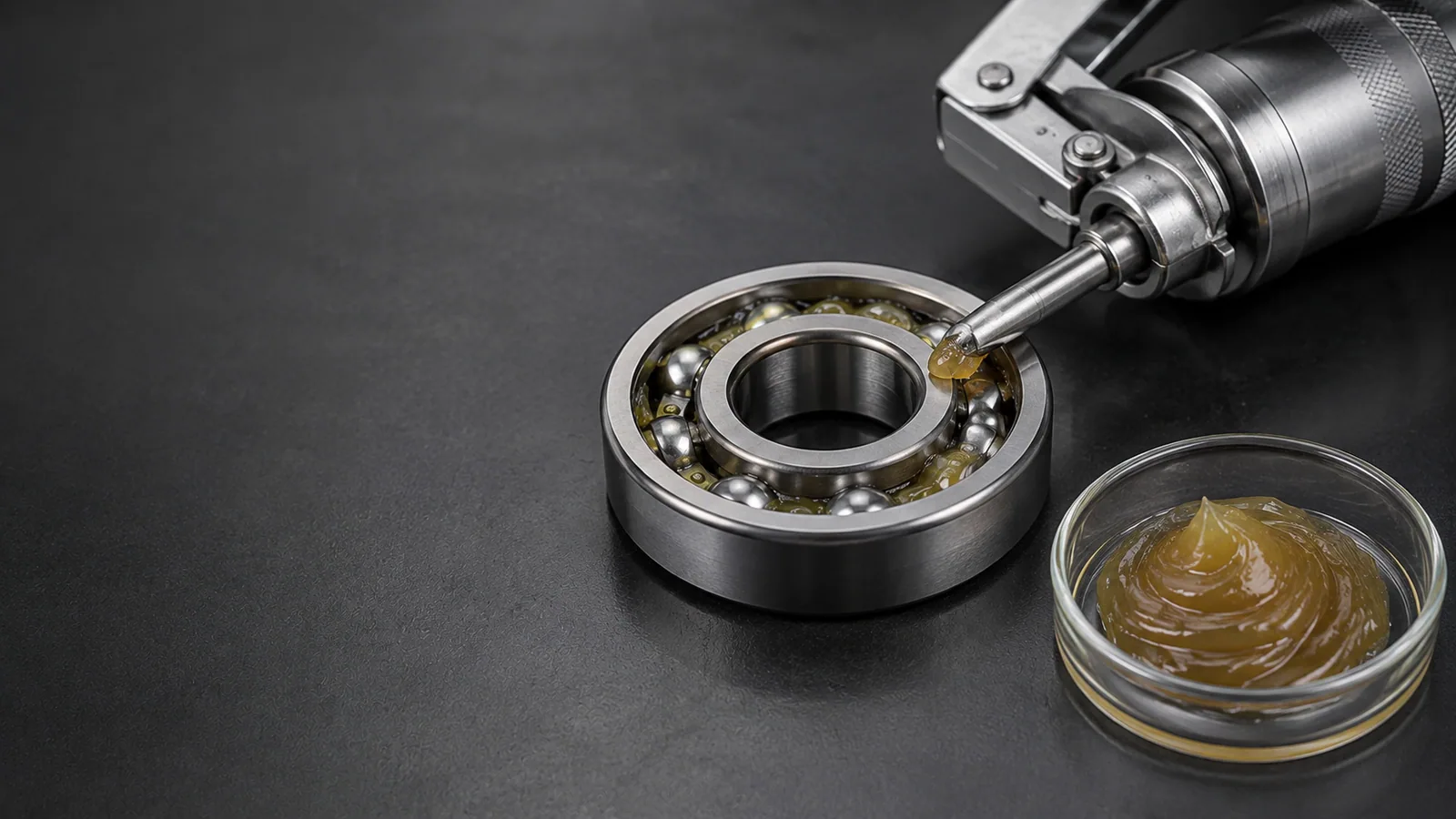
Grease is a system of base oil, thickener and additives. The base oil provides the lubricating film, while the thickener retains and releases oil within the bearing. Selection must therefore consider the viscosity required at the bearing’s actual operating temperature, not only the temperature printed on a product label.
Bearing size, type, speed and load influence the required viscosity. Very high viscosity can increase friction and temperature at speed; viscosity that is too low can produce an inadequate film. Use the bearing manufacturer’s viscosity method for the actual operating point.
Consistency and additives answer different questions
NLGI grade is a consistency classification. It affects grease handling, leakage and mechanical behavior, but two NLGI 2 greases can have very different base oils, thickeners and performance.
Load, vibration, water, corrosion risk, vertical shafts, oscillation and food-contact requirements can all change the suitable formulation. Additives are not a substitute for correct viscosity, clean delivery and a valid relubrication plan.
Treat grease changes as controlled changes
SKF advises checking both base oil and thickener compatibility when considering an alternative grease. Compatibility tables are guidance, not proof for every formulation. If products are incompatible, the old grease must be removed according to the equipment and lubricant instructions.
After a change, monitor temperature, noise, vibration, leakage and grease condition. Do not assume that more grease improves lubrication; overfilling can increase churning and temperature. The correct quantity and relubrication interval are arrangement-specific.
Grease selection data sheet
- Bearing type, size, speed and orientation.
- Normal and peak load, vibration and oscillation.
- Minimum, normal and maximum bearing temperature.
- Water, dust, chemicals and corrosion conditions.
- Current grease, refill method and permitted purge path.
- Regulatory needs and elastomer compatibility.
Frequently asked questions
Can two NLGI 2 greases be mixed?
Not automatically. NLGI grade alone does not establish compatibility. Check base oils, thickeners and manufacturer guidance, then validate the change.
How much grease should a bearing contain?
There is no universal percentage for every bearing. Free space, speed, arrangement and relubrication method control the quantity; follow the product and equipment instructions.
Fact-check sources
This article supports technical discussion and procurement preparation. Final selection, life, speed, fits and lubrication must be confirmed from the offered manufacturer data and actual duty.