Three clearance states must not be confused
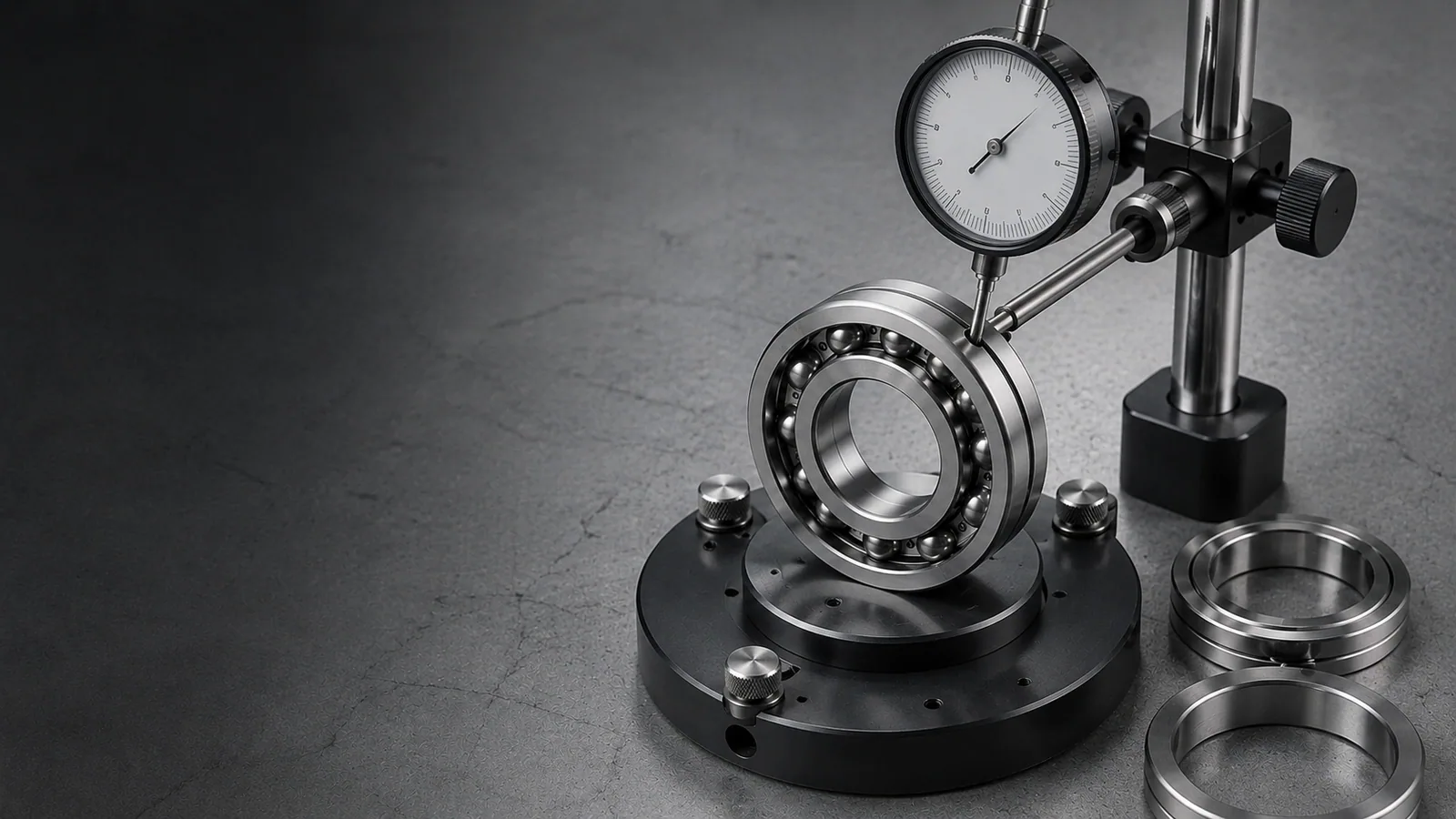
Initial internal clearance is measured before mounting. Mounted clearance is what remains after the rings are fitted to the shaft and housing. Operating clearance is the clearance in the mounted bearing at operating temperature.
Schaeffler describes operating clearance as the initial radial clearance minus changes caused by fits and thermal influences. The exact result depends on bearing type, size, interference, surrounding materials and temperatures.
Why fits and temperature matter
An interference fit can expand an inner ring or compress an outer ring, reducing radial internal clearance. A temperature difference between rings can change it further. For example, an inner ring running hotter than the outer ring commonly reduces operating clearance, but the complete thermal path must be assessed.
Too little operating clearance may increase friction, heat and preload. Excessive clearance can reduce stiffness and affect load distribution, noise and vibration. Neither condition should be diagnosed from a suffix alone.
What C2, Normal, C3, C4 and C5 mean
These groups describe ranges of internal clearance. C2 is below Normal; C3, C4 and C5 are progressively above Normal. ISO 5753-1 specifies radial clearance values for defined bearing types and bore arrangements.
The actual micrometre range depends on bearing type and size. C3 is not automatically “better,” and it is not a tolerance or precision class. It is selected when the mounted and thermal reductions require greater initial clearance.
Information needed for clearance selection
- Bearing type, size and internal design.
- Shaft and housing fits, materials and wall thickness.
- Inner-ring and outer-ring operating temperatures.
- Speed, load, misalignment and required stiffness or noise.
- Mounting method and, for tapered bores, the measured clearance reduction.
Frequently asked questions
Can C3 replace Normal clearance?
Only when the resulting mounted and operating clearance is appropriate. A direct swap without fit and temperature review can create excess clearance.
Is zero operating clearance always ideal?
No. The required operating clearance or preload depends on bearing type and application. Use manufacturer calculation guidance for the actual arrangement.
Fact-check sources
This article supports technical discussion and procurement preparation. Final selection, life, speed, fits and lubrication must be confirmed from the offered manufacturer data and actual duty.