Dimensions are the first gate, not the final approval
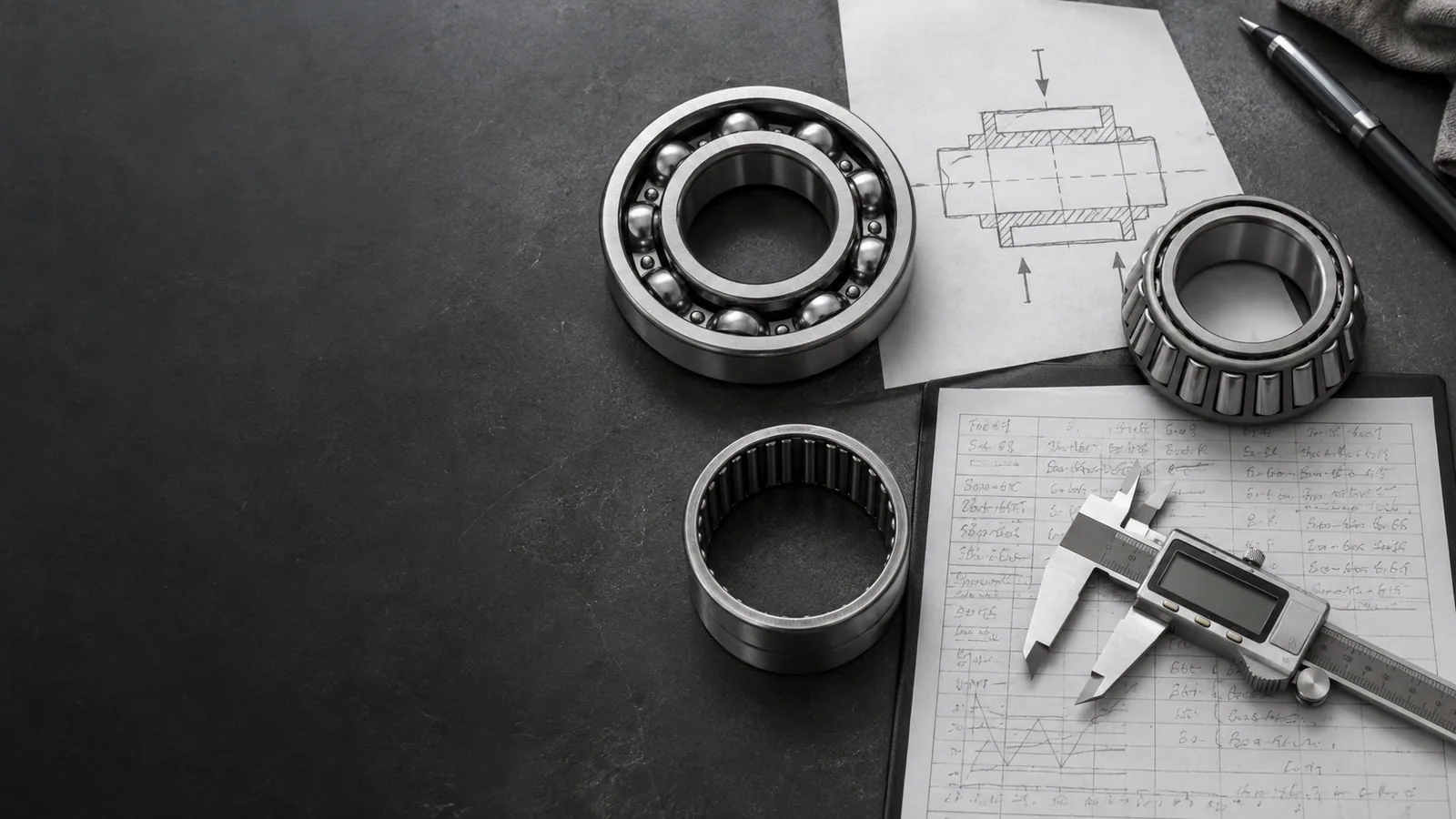
ISO 15 specifies preferred boundary dimensions for radial bearings, which helps products from different manufacturers fit the same nominal envelope. ISO 492 specifies dimensional and geometrical characteristics and tolerance values for radial bearing interfaces.
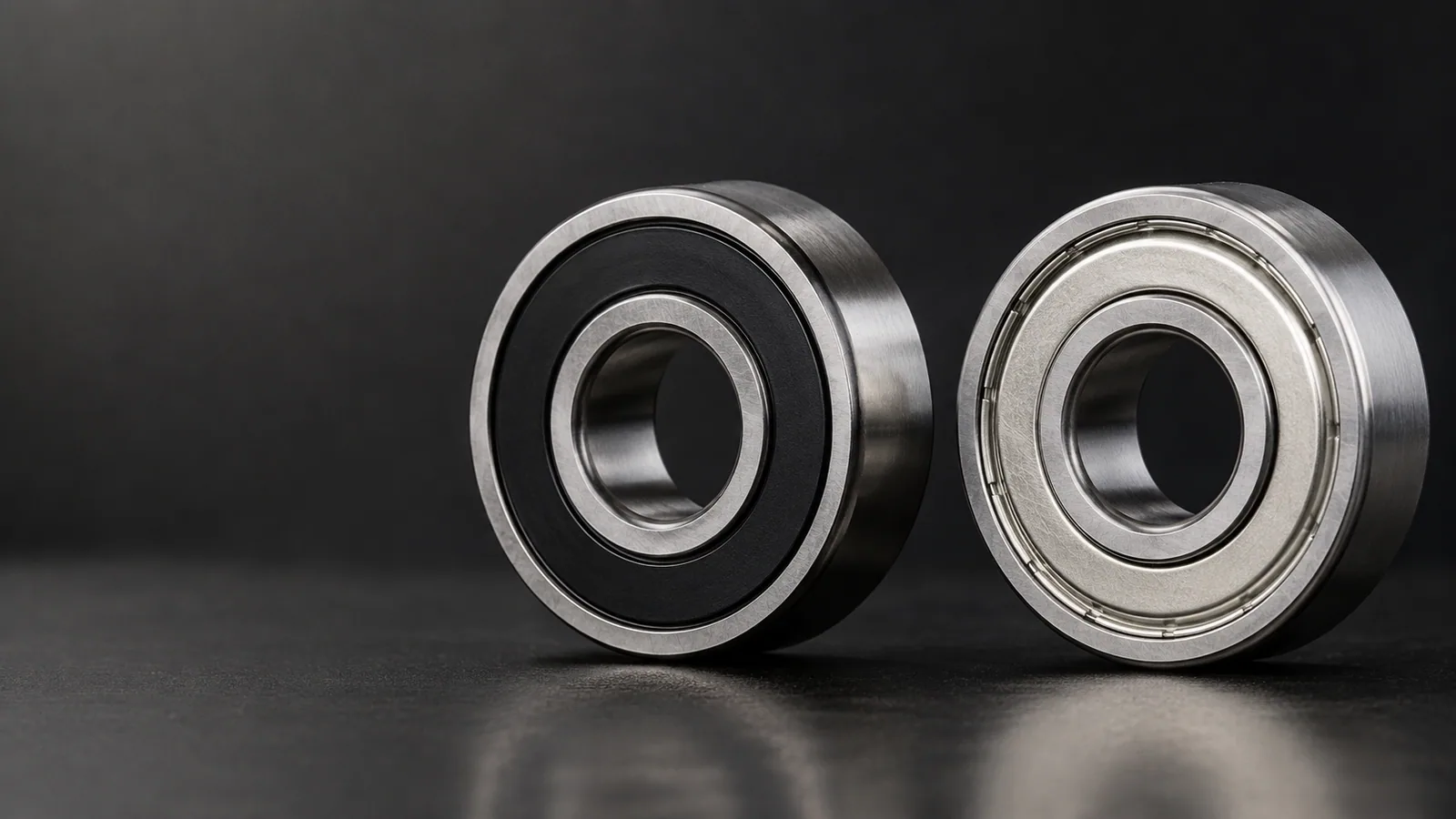
A shared envelope does not prove identical internal geometry, contact angle, rolling-element complement, cage, heat treatment, surface finish, seal or lubricant. Those differences can change stiffness, friction, speed, noise and service behavior.
Compare ratings on the same basis
Record basic dynamic load rating, basic static load rating, reference or limiting speed and the catalogue conditions attached to them. ISO 281 standardizes rating-life calculation methods, but catalogue results may still depend on manufacturer design data and assumptions.
Do not compare one supplier’s limiting speed with another supplier’s reference speed as if they were the same quantity. Also check whether published speed assumes open, shielded or sealed execution and a particular grease.
Equivalent-quote comparison sheet
- Manufacturer and exact designation, revision and product drawing.
- Bore, outside diameter, width, chamfers and locating features.
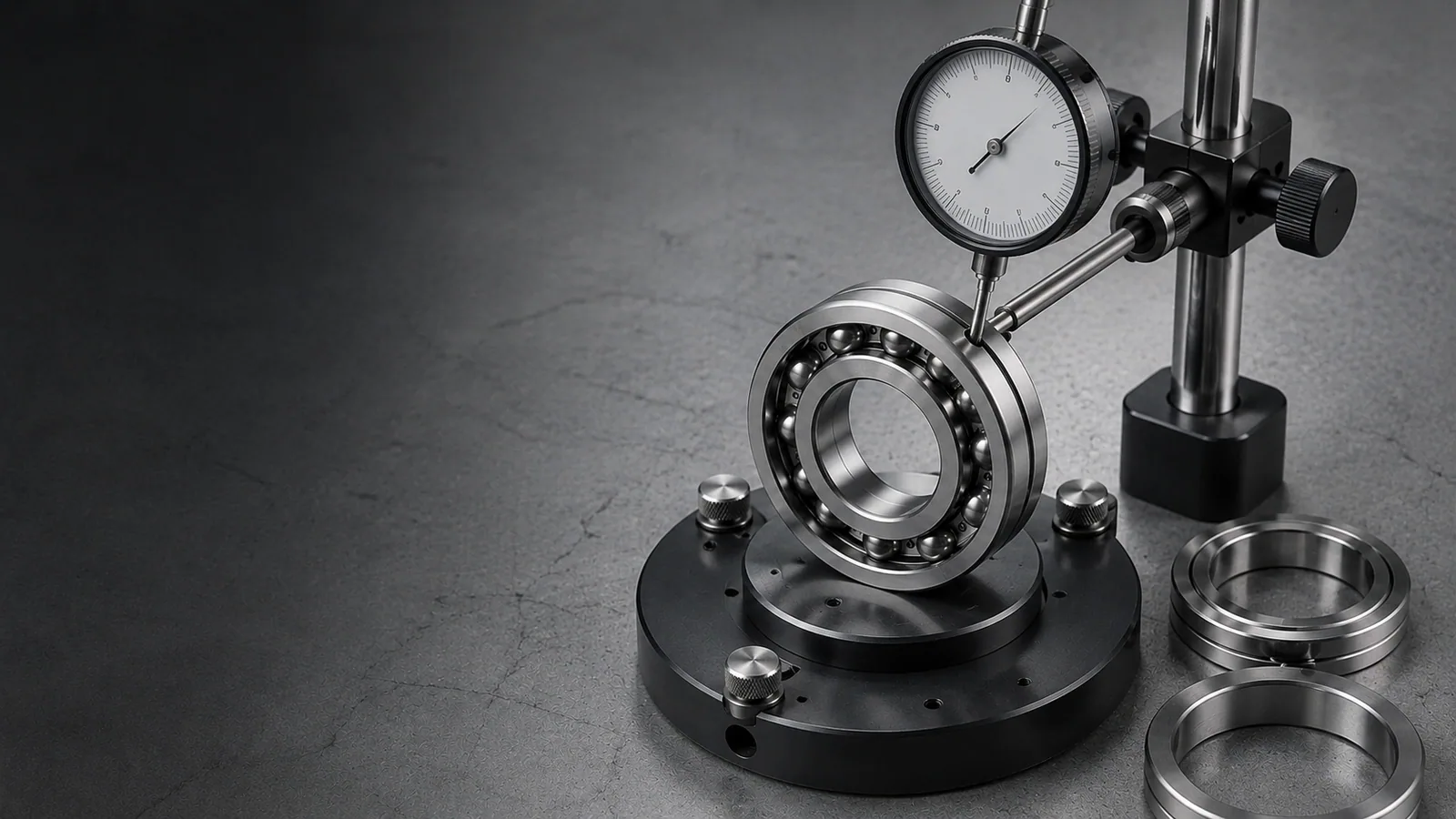
- Tolerance class, running accuracy and internal clearance.
- Internal design, contact angle, rows and rolling-element complement.
- Ring and rolling-element material, heat treatment and stabilization.
- Cage, seal or shield, grease and fill specification.
- Dynamic/static ratings, speed limits and mass.
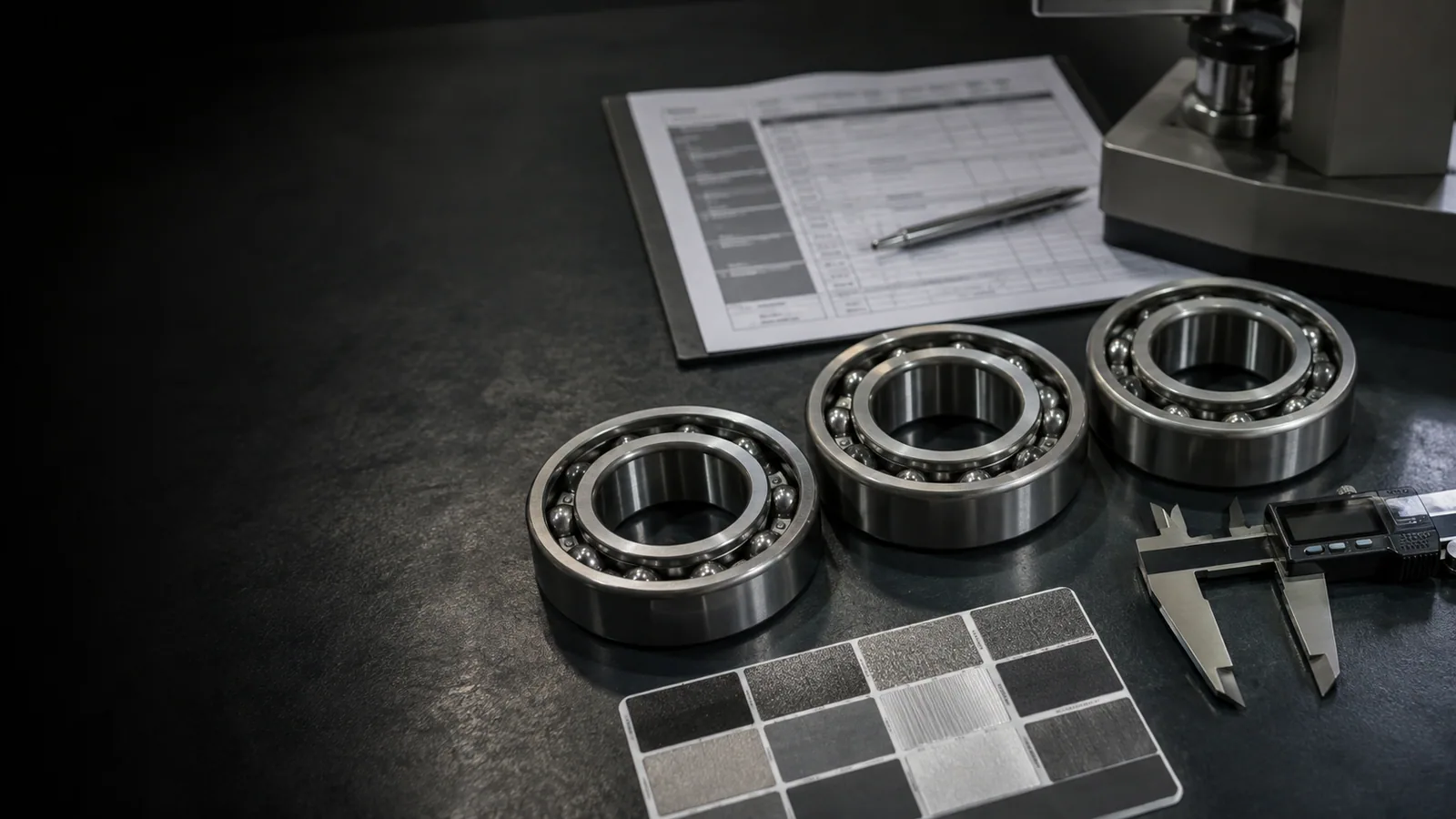
- Inspection report, traceability, compliance and packaging evidence.
Approve deviations explicitly
A supplier should mark every deviation or unconfirmed item instead of calling the product “100% equivalent.” For critical applications, validate samples under representative fits, loads, speed, temperature and contamination. Keep the approved drawing and specification revision with the purchase order.
Frequently asked questions
Do the same ISO dimensions make two bearings equivalent?
They support dimensional interchangeability, but performance equivalence still requires review of design, tolerances, clearance, materials, seals, lubrication and ratings.
Can catalogue load ratings be copied from a reference brand?
No. Ratings should come from the offered manufacturer’s controlled technical data and should be reviewed on a comparable calculation basis.
Fact-check sources
- ISO 15:2017 — Radial bearing boundary dimensions
- ISO 492:2023 — Radial bearing tolerances
- ISO 281:2007 — Dynamic load ratings and rating life
This article supports technical discussion and procurement preparation. Final selection, life, speed, fits and lubrication must be confirmed from the offered manufacturer data and actual duty.