
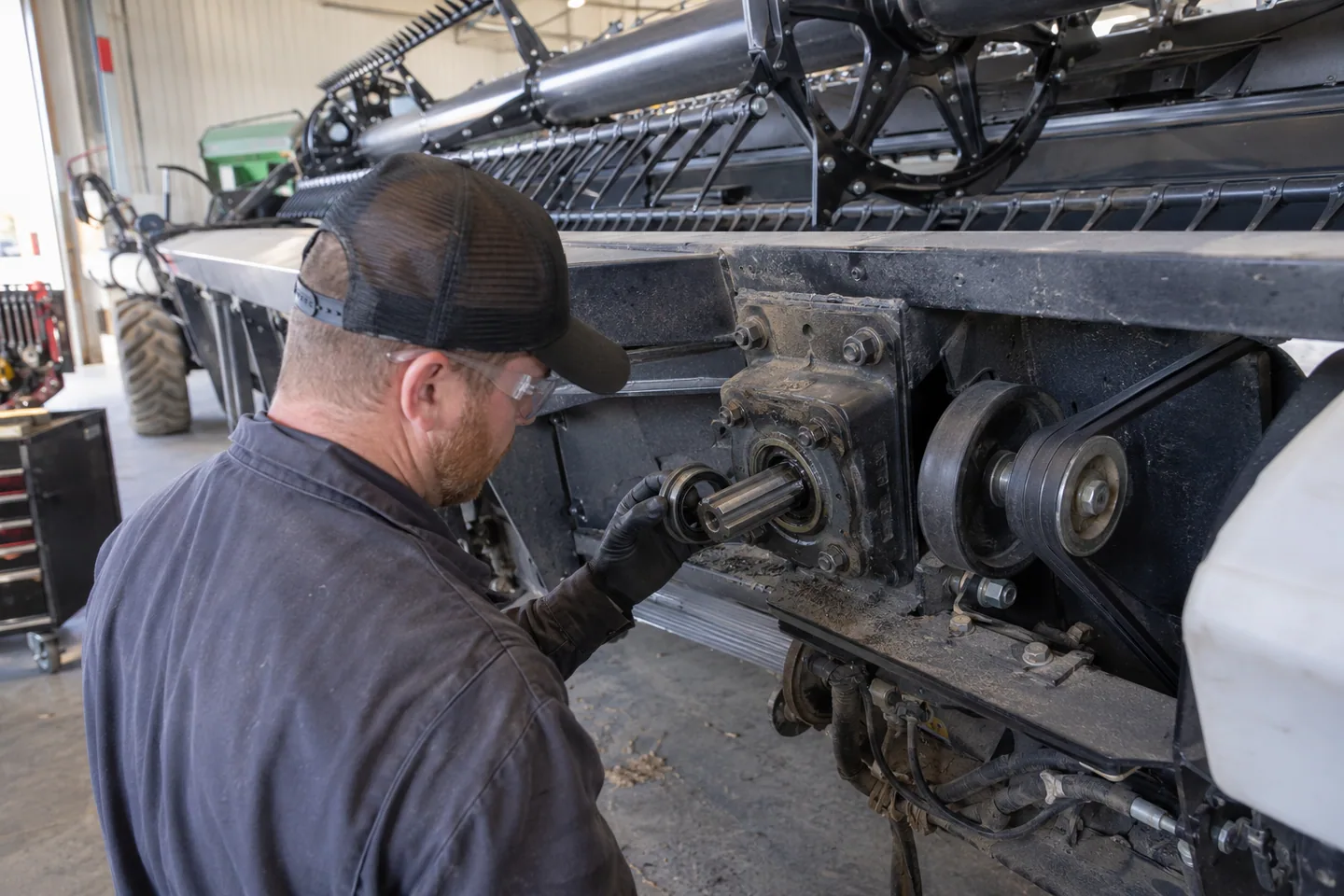
Industry application engineering

Bearings for Agricultural Machinery

Agricultural machinery bearings face soil, dust, crop residue, moisture, shock and seasonal operating cycles. Selection must account for the complete bearing, housing, seal, lubrication and mounting arrangement at each machine position.

Bearings for Agricultural Machinery

Industry overview

Start with the operating duty.

LTO supports agricultural equipment OEMs and distributors with broad model coverage, supplier matching, manufacturing coordination, inspection and consolidated export supply. The machine position and field duty are reviewed before a model is confirmed.

Model designations and bearing-family examples are screening references. The approved quotation, drawing and offered manufacturer data govern the final supply specification.

01 · Equipment

Typical Equipment

The bearing position and surrounding assembly must be identified before a catalogue designation is evaluated.

Tractors

Powertrain, implement and auxiliary positions with varied speed, load and exposure.

Combine Harvesters

Seasonal machines with conveyors, threshing and crop-handling mechanisms.

Seeders

Ground-engaging and metering assemblies exposed to dust and intermittent duty.

Disc Harrows

Soil-working equipment with shock, contamination and demanding sealing needs.

Tillage Equipment

Low-speed, heavy-duty rotating points exposed to soil and impact.

Irrigation Equipment

Outdoor drive and pump-related positions exposed to water and corrosion.

Agricultural Conveyors

Crop and material handling equipment with mounted bearing and pulley positions.

02 · Duty

Operating Conditions

Use these conditions to define the bearing arrangement, enclosure, lubricant, fit and maintenance plan.

01

Dust

Fine soil and crop material can contaminate lubricant and rolling contacts.

02

Mud

Wet abrasive material increases sealing and cleaning demands.

03

Moisture

Outdoor storage, washing and irrigation exposure affect corrosion protection.

04

Shock loading

Ground contact, blockages and uneven material flow create transient loads.

05

Contamination

Seal choice and relubrication strategy must suit the actual ingress path.

06

Misalignment

Welded frames, long shafts and field deflection can change bearing alignment.

07

Intermittent duty

Seasonal use makes storage, lubricant condition and startup checks important.

08

Low-speed heavy-duty operation

Static capacity and lubrication must be checked even when speed is low.

03 · Engineering inputs

Bearing Selection Factors

This table organizes the minimum engineering discussion. It does not replace calculation against the complete application duty.

FactorEngineering consideration
Machine positionDefine the component, load path, mounting and available maintenance access.
Load & shockProvide steady radial/axial duty plus impact and blockage events.
ContaminationIdentify soil, crop residue, mud, water and cleaning exposure.
AlignmentReview frame flexibility, shaft deflection and housing alignment.
SealingMatch bearing seals, housing protection and relubrication purge.
LubricationConfirm grease type, interval, seasonal storage and temperature range.
MountingConfirm shaft size, locking method, housing footprint and replacement access.

04 · Reliability review

Common Failure Risks to Screen

These are review prompts, not a diagnosis of any specific machine or bearing failure.

Seal damage

Crop wrapping, soil and pressure washing can compromise sealing.

Corrosion during storage

Moisture and long idle periods can damage unprotected surfaces.

Loose mounting

Shock and vibration can affect locking devices, housings and fasteners.

Wrong relubrication practice

Grease type, quantity and interval must match the season and environment.

06 · Published model data

Reference Models for Engineering Review

No model-level application relationship is currently marked as verified. The pages below provide dimensions and technical references for an engineering review.

Final bearing selection should be confirmed against the actual load, speed, fit, clearance, lubrication, environment and application requirements.

RFQ

Send Your Bearing Requirements

Share what is already known. LTO will coordinate supplier matching, technical confirmation, quality requirements and export supply for the requested application.

Machine and bearing positionExisting model or brandQuantity and destinationShaft/housing dimensionsLoad, shock and speedDust/mud/moisture exposureSeal and lubrication requirementMounting methodDrawing or specification