
Industry application engineering

Bearings for Gearboxes

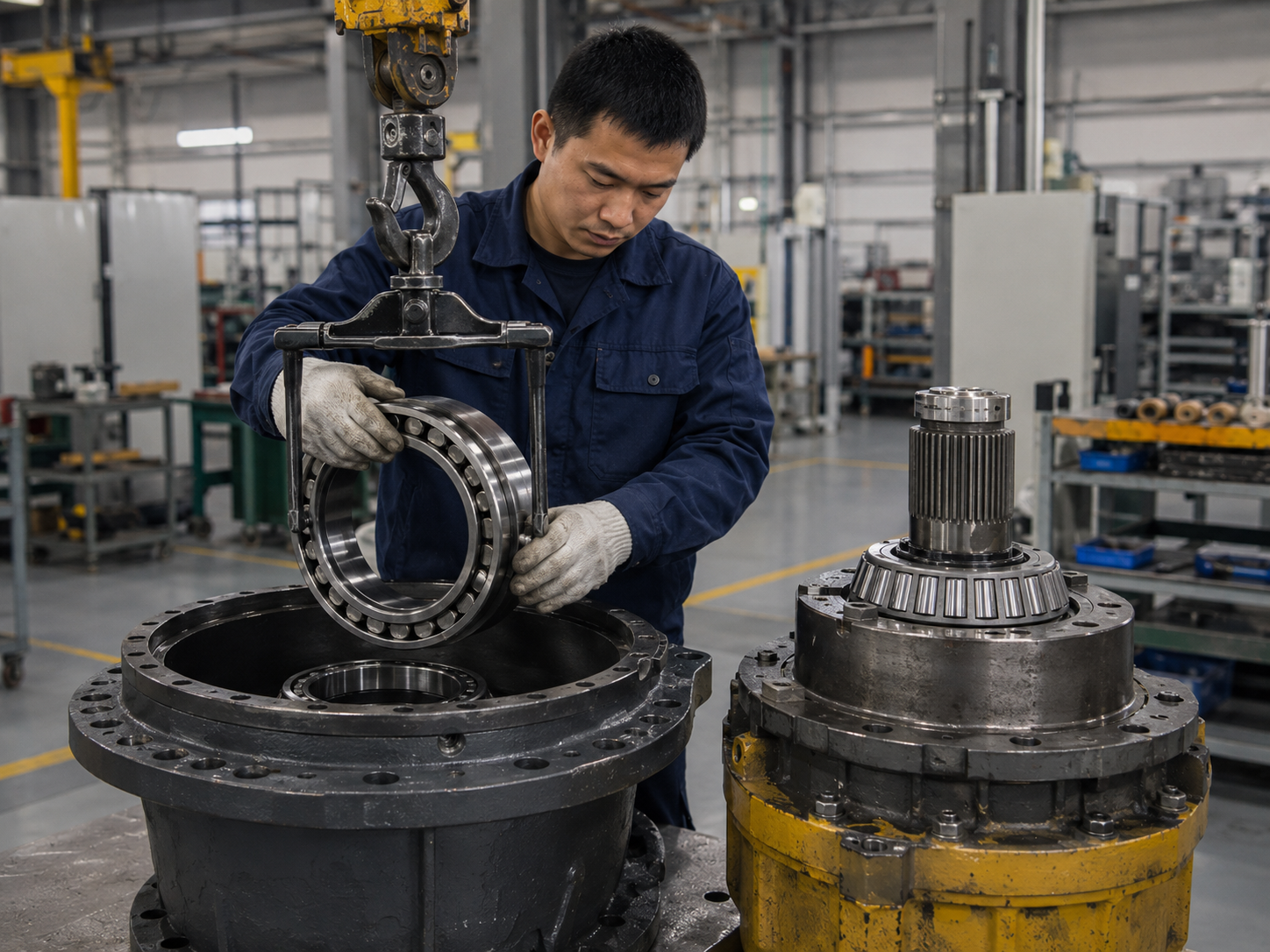
Gearbox bearings support shafts and maintain gear alignment while tooth forces generate radial and axial loads. Gear type, shaft position, housing stiffness, speed, lubrication and deflection must be reviewed as one bearing arrangement.

Bearings for Gearboxes

Industry overview

Start with the operating duty.

LTO supports gearbox OEMs, repair programs and distributors with broad model coverage, supplier matching, manufacturing coordination, inspection planning and consolidated export supply. Final bearing approval remains tied to the actual gearbox duty and drawing.

Model designations and bearing-family examples are screening references. The approved quotation, drawing and offered manufacturer data govern the final supply specification.

01 · Equipment

Typical Equipment

The bearing position and surrounding assembly must be identified before a catalogue designation is evaluated.

Industrial Gearboxes

Parallel-shaft, bevel, worm and other industrial gear arrangements.

Speed Reducers

Power-transmission units where gear forces and reduction ratio affect bearing duty.

Gearmotors

Integrated motor and reducer systems with compact shaft and housing arrangements.

Conveyor Gearboxes

Drives exposed to variable material load, starts, stops and environmental contamination.

Machinery Transmissions

Production equipment requiring controlled shaft position and repeatable torque transmission.

02 · Duty

Operating Conditions

Use these conditions to define the bearing arrangement, enclosure, lubricant, fit and maintenance plan.

01

Radial load

Gear separating forces and shaft weight contribute to the radial bearing load.

02

Axial load

Helical and bevel gears can generate significant directional thrust.

03

Combined load

Many locating positions carry radial and axial forces simultaneously.

04

Gear mesh vibration

Mesh excitation, backlash and surface condition affect vibration transmitted to bearings.

05

Shaft deflection

Deflection can alter gear contact and create bearing misalignment or edge loading.

06

Speed

Input and output shafts may require different bearing and lubrication strategies.

07

Lubrication

Oil grade, delivery and cleanliness must support both gears and bearings.

08

Alignment

Housing geometry and assembly tolerances govern shaft-to-bearing alignment.

09

Temperature

Operating heat changes viscosity, fits, clearance and dimensional stability.

03 · Engineering inputs

Bearing Selection Factors

This table organizes the minimum engineering discussion. It does not replace calculation against the complete application duty.

FactorEngineering consideration
Gear geometryIdentify spur, helical, bevel or worm gearing and the resulting force directions.
Load spectrumProvide torque, radial/axial loads, shock events and duty cycle.
Shaft positionDefine locating and non-locating positions plus permitted axial displacement.
DeflectionReview shaft and housing stiffness, gear alignment and bearing span.
SpeedCheck input, intermediate and output shaft speeds separately.
LubricationConfirm oil grade, method, cleanliness target and expected temperature.
Fit & clearanceMatch shaft/housing fits and internal clearance to load direction and temperature.

04 · Reliability review

Common Failure Risks to Screen

These are review prompts, not a diagnosis of any specific machine or bearing failure.

Edge loading

Shaft or housing deflection can concentrate roller or raceway contact.

Debris damage

Wear particles circulating in gearbox oil can indent rolling contacts.

Wrong locating arrangement

Axial constraint and thermal shaft growth must be resolved across the bearing system.

Inadequate lubrication

Oil level, viscosity, delivery and contamination control affect film formation.

RFQ

Send Your Bearing Requirements

Share what is already known. LTO will coordinate supplier matching, technical confirmation, quality requirements and export supply for the requested application.

Existing model or brandGearbox and gear typeQuantity and destinationShaft speed and torqueRadial and axial loadsShaft/housing fitsLubricant and temperatureClearance or preload requirementDrawing or specification