
Industry application engineering

Bearings for Mining & Conveyor Equipment

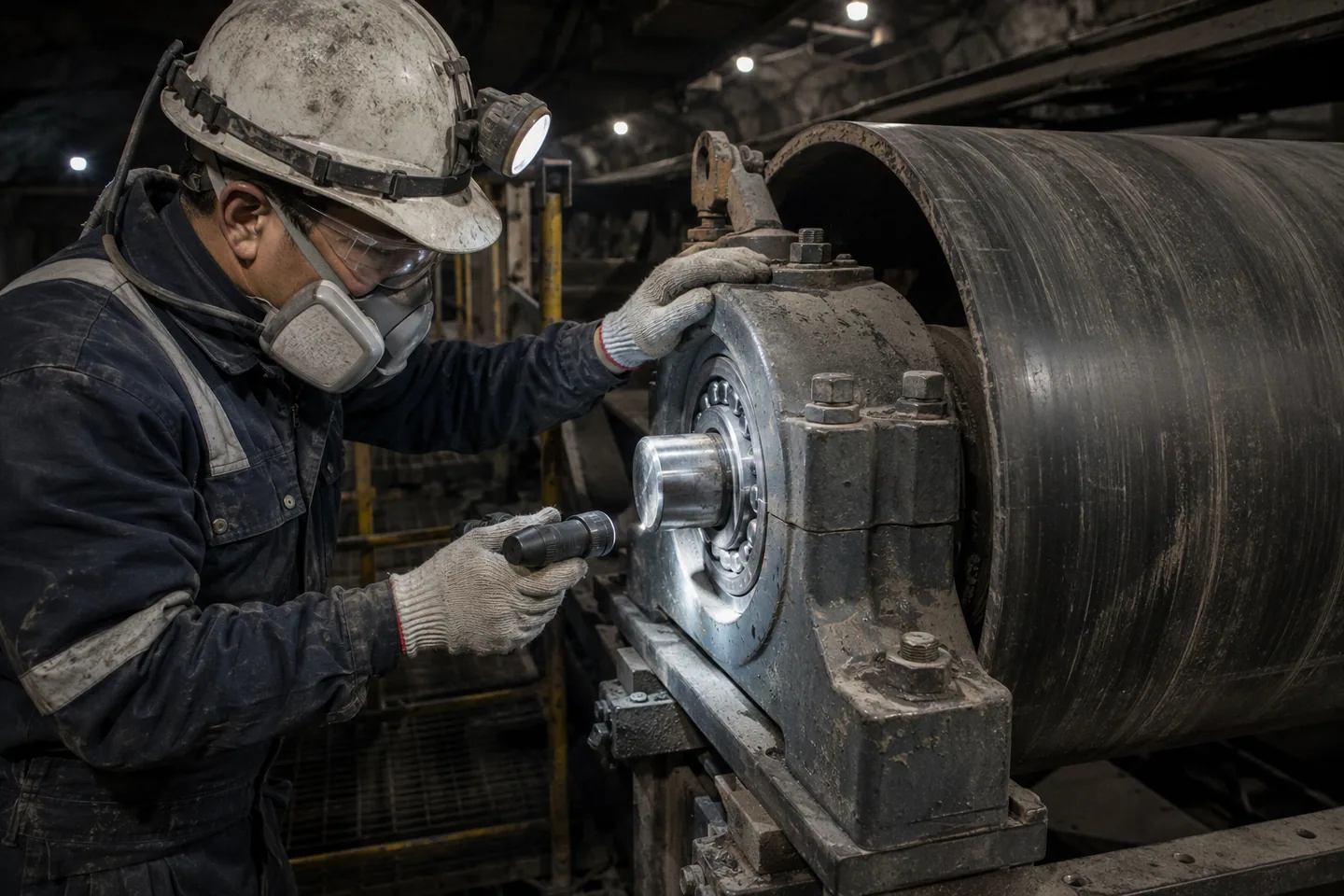
Mining and conveyor bearings operate where heavy material loads, shock, abrasive dust, moisture and difficult maintenance access can combine. Bearing type, housing, seals, lubrication and mounting must be evaluated as a complete arrangement.

Bearings for Mining & Conveyor Equipment

Industry overview

Start with the operating duty.

LTO coordinates heavy-duty bearing, housing and mounted-unit supply through specialized production resources, with engineering verification, quality inspection and export consolidation based on the customer’s equipment and maintenance requirements.

Model designations and bearing-family examples are screening references. The approved quotation, drawing and offered manufacturer data govern the final supply specification.

01 · Equipment

Typical Equipment

The bearing position and surrounding assembly must be identified before a catalogue designation is evaluated.

Crushers

High-load equipment with shock, vibration and contamination exposure.

Conveyors

Continuous material transport systems with drive, pulley and idler bearing positions.

Screens

Vibrating equipment that imposes cyclic load and demanding lubrication conditions.

Idlers

Distributed conveyor components where sealing, rotation and service access matter.

Pulley Assemblies

Head, tail, take-up and bend pulleys carrying belt tension and material load.

Material Handling Equipment

Feeders, elevators and transfer equipment exposed to dust and impact.

Grinding Equipment

Heavy process machinery with radial load, vibration and contamination.

02 · Duty

Operating Conditions

Use these conditions to define the bearing arrangement, enclosure, lubricant, fit and maintenance plan.

01

Heavy radial load

Material weight, belt tension and process forces can dominate bearing duty.

02

Shock loading

Impact from feed material and starts/stops must be included in the load spectrum.

03

Dust

Abrasive contamination can enter housings and damage lubricant and raceways.

04

Moisture

Outdoor exposure, washdown or process water affects corrosion and sealing strategy.

05

Vibration

Screens, crushers and rotating imbalance can impose cyclic bearing loads.

06

Misalignment

Long shafts, housing support and structural deflection can change alignment.

07

Continuous duty

Conveyors may require long operating intervals and planned relubrication.

08

Low-speed heavy load

Slow shafts still require adequate lubricant film and static-load review.

03 · Engineering inputs

Bearing Selection Factors

This table organizes the minimum engineering discussion. It does not replace calculation against the complete application duty.

FactorEngineering consideration
Load spectrumInclude steady load, belt tension, shock, vibration and starting events.
AlignmentReview shaft deflection, housing support and permissible misalignment.
SealingSelect the bearing, housing seals and grease barrier as one contamination-control system.
LubricationConfirm grease delivery, purge, relubrication interval and access.
Static capacityCheck low-speed and shock conditions against the actual bearing arrangement.
MountingConfirm shaft seat, sleeve, housing and installation method.
MaintenanceConsider inspection access, replacement time and condition-monitoring points.

04 · Reliability review

Common Failure Risks to Screen

These are review prompts, not a diagnosis of any specific machine or bearing failure.

Contamination ingress

Dust and moisture can overwhelm a seal or housing that is not matched to the environment.

Shock-related damage

Transient loads may exceed normal running duty and require static-load checks.

Relubrication failure

Blocked paths, wrong grease or unsuitable intervals can leave contacts under-lubricated.

Housing misalignment

Base distortion and mounting errors can concentrate load or restrict self-alignment.

06 · Published model data

Reference Models for Engineering Review

No model-level application relationship is currently marked as verified. The pages below provide dimensions and technical references for an engineering review.

Final bearing selection should be confirmed against the actual load, speed, fit, clearance, lubrication, environment and application requirements.

RFQ

Send Your Bearing Requirements

Share what is already known. LTO will coordinate supplier matching, technical confirmation, quality requirements and export supply for the requested application.

Equipment and bearing positionExisting model or brandQuantity and destinationRadial/axial load and shock dutySpeed and duty cycleDust/moisture exposureHousing and seal requirementLubrication methodDrawing or specification