
Industry application engineering

Bearings for Industrial Pumps

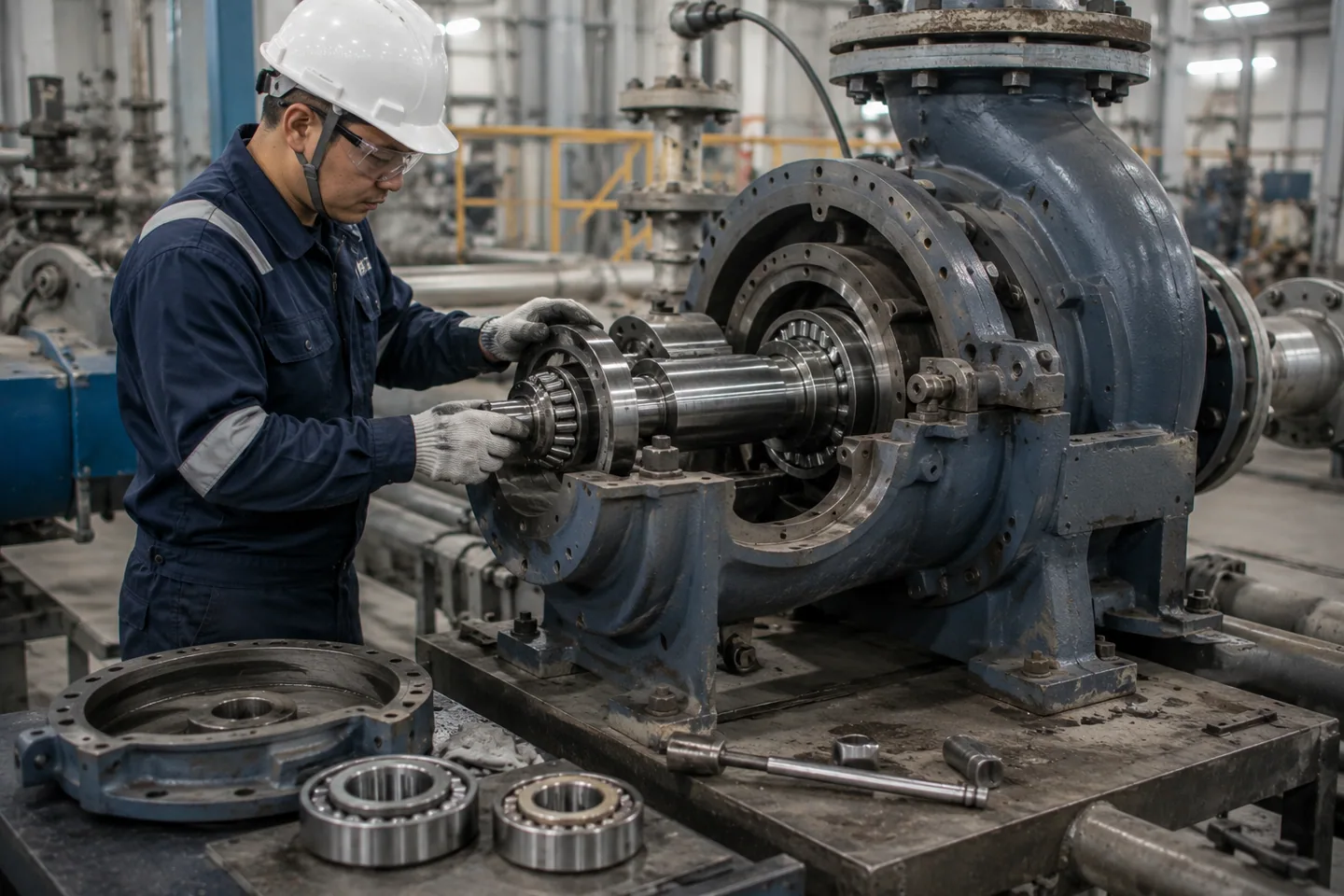
Industrial pump bearings locate and support the shaft while the impeller, coupling and hydraulic forces create changing radial and axial duty. The correct arrangement depends on the pump design, load direction, speed, lubrication system and surrounding process environment.

Bearings for Industrial Pumps

Industry overview

Start with the operating duty.

LTO coordinates bearing supply for industrial, centrifugal and process-pump programs after the duty, arrangement and required documentation are reviewed. The offered manufacturer data sheet—not a generic application list—governs the final selection.

Model designations and bearing-family examples are screening references. The approved quotation, drawing and offered manufacturer data govern the final supply specification.

01 · Equipment

Typical Equipment

The bearing position and surrounding assembly must be identified before a catalogue designation is evaluated.

Centrifugal Pumps

Impeller-driven pumps with radial duty and pump-specific thrust behavior.

Industrial Process Pumps

Continuous production equipment where reliability and maintenance planning matter.

Water Pumps

Industrial water-handling equipment; this page does not cover automotive water-pump repair.

Chemical Pumps

Process equipment where sealing integrity and environmental exposure require review.

Petrochemical Pumps

Critical rotating equipment with defined operating, documentation and inspection requirements.

02 · Duty

Operating Conditions

Use these conditions to define the bearing arrangement, enclosure, lubricant, fit and maintenance plan.

01

Continuous operation

Long duty cycles require stable temperature, lubrication and shaft support.

02

Radial load

Impeller mass, hydraulic forces and coupling condition contribute to radial duty.

03

Axial load

Impeller design and pressure balance can change both magnitude and direction of thrust.

04

Combined load

The locating bearing or bearing pair must be checked for simultaneous radial and axial forces.

05

Speed

Rotational speed affects heat, minimum-load behavior, lubricant and cage selection.

06

Shaft alignment

Coupling, shaft and housing alignment influence load distribution and vibration.

07

Lubrication

Grease, oil bath or circulation method must suit the pump arrangement and maintenance plan.

08

Temperature

Process and bearing temperatures affect fits, clearance, lubricant and seals.

09

Corrosion exposure

External process conditions may require material, coating or sealing review.

10

Vibration

Hydraulic condition, balance, alignment and foundation stiffness can affect bearing vibration.

03 · Engineering inputs

Bearing Selection Factors

This table organizes the minimum engineering discussion. It does not replace calculation against the complete application duty.

FactorEngineering consideration
Pump arrangementIdentify the radial and thrust positions, bearing pairing and direction of axial duty.
LoadProvide radial and axial loads across startup, rated flow and off-design operation.
SpeedConfirm continuous, maximum and transient shaft speeds.
AlignmentReview shaft, coupling, housing and mounting tolerances.
LubricationDefine grease or oil method, viscosity, cleanliness and maintenance interval.
TemperatureProvide ambient, process and expected bearing operating temperatures.
EnvironmentIdentify moisture, chemicals, washdown, dust and corrosion exposure.

04 · Reliability review

Common Failure Risks to Screen

These are review prompts, not a diagnosis of any specific machine or bearing failure.

Unresolved thrust direction

Pump thrust may vary with impeller type and operating point.

Contaminated lubricant

Water or process contamination can damage raceways and rolling elements.

Inadequate minimum load

High-speed bearing arrangements may require load or preload control to avoid skidding.

Misalignment

Shaft, housing or coupling misalignment can concentrate load and raise temperature.

RFQ

Send Your Bearing Requirements

Share what is already known. LTO will coordinate supplier matching, technical confirmation, quality requirements and export supply for the requested application.

Existing model or brandPump type and bearing positionQuantity and destinationSpeedRadial and axial loadsLubrication methodTemperature and environmentShaft and housing fitsDrawing or specification