
Industry application engineering

Bearings for Electric Motors

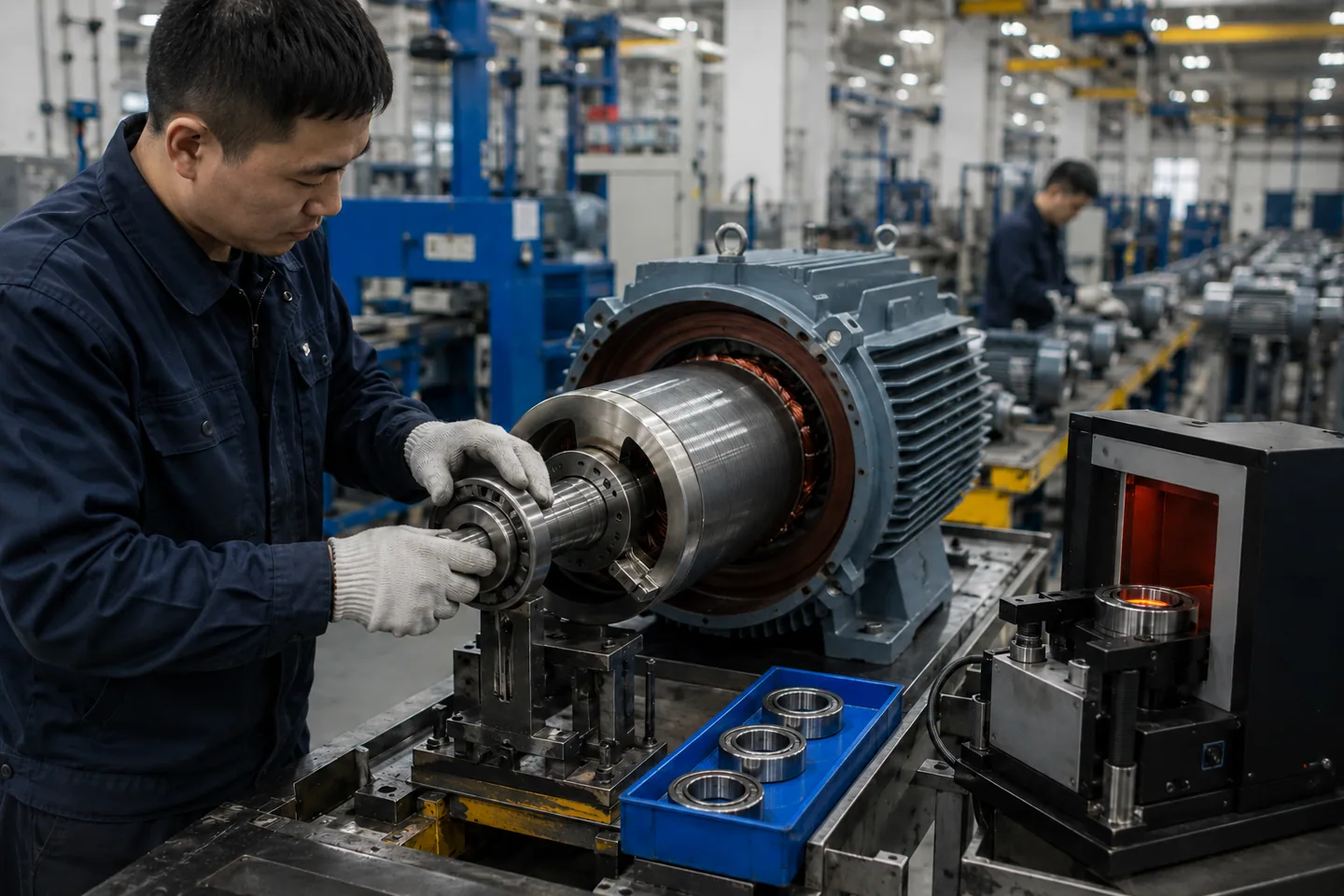
Electric motor bearings support the rotor, maintain the air-gap relationship and help the shaft run with controlled friction, noise and vibration. Selection begins with the actual motor arrangement—not a bearing number alone.

Bearings for Electric Motors

Industry overview

Start with the operating duty.

LTO supplies standard, OEM and application-specific bearing solutions through specialized manufacturing and supply resources in China’s bearing industry cluster. Each quotation is matched to the requested speed, fit, clearance, sealing, lubrication and inspection requirements.

Model designations and bearing-family examples are screening references. The approved quotation, drawing and offered manufacturer data govern the final supply specification.

01 · Equipment

Typical Equipment

The bearing position and surrounding assembly must be identified before a catalogue designation is evaluated.

AC Motors

General-purpose and inverter-driven industrial motor arrangements.

DC Motors

Rotating equipment where speed range and commutation duty affect the bearing environment.

Industrial Motors

Continuous-duty motors used in production, processing and material handling.

Gearmotors

Compact motor and reducer assemblies with coupled motor and gearbox loads.

Fans & Blowers

High-speed rotating equipment where balance, noise and vibration are important.

Pump Motors

Drive motors whose bearing selection remains separate from the pump-end bearing arrangement.

02 · Duty

Operating Conditions

Use these conditions to define the bearing arrangement, enclosure, lubricant, fit and maintenance plan.

01

High rotational speed

Speed influences heat generation, cage behavior, lubricant selection and enclosure choice.

02

Continuous duty

Long running periods increase the importance of stable lubrication and operating temperature.

03

Noise requirements

Internal geometry, cleanliness, grease, fit and installation quality all contribute to acoustic performance.

04

Vibration control

Rotor balance, bearing quality, alignment and mounting affect vibration at the motor and driven equipment.

05

Thermal expansion

Operating temperatures change fits and the effective internal clearance.

06

Radial load

Rotor mass, belt forces and magnetic forces can contribute to the radial duty.

07

Limited axial load

Couplings, fans or process forces may introduce axial load that the locating arrangement must accommodate.

08

Lubrication stability

Grease type, fill, temperature and speed must support the required maintenance interval.

03 · Engineering inputs

Bearing Selection Factors

This table organizes the minimum engineering discussion. It does not replace calculation against the complete application duty.

FactorEngineering consideration
SpeedReview heat generation, cage suitability, enclosure friction and lubricant speed capability.
LoadDefine radial, axial and combined loads at both drive and non-drive positions.
Noise & vibrationState the required NVH level, test method and acceptance limit.
ClearanceAccount for interference fits, thermal expansion and the target operating clearance.
Seal typeBalance contamination protection and grease retention against friction and heat.
LubricationConfirm grease or oil type, temperature range, relubrication method and target life.
FitConfirm shaft and housing tolerances and their effect on the mounted internal clearance.

04 · Reliability review

Common Failure Risks to Screen

These are review prompts, not a diagnosis of any specific machine or bearing failure.

Incorrect operating clearance

An interference fit and temperature rise can reduce the initial clearance.

Lubrication mismatch

Grease viscosity, thickener, fill and service temperature must suit the speed and duty.

Electrical current damage

Variable-frequency drive systems may require an electrical-current mitigation strategy outside the bearing designation alone.

Installation damage

Force transmitted through rolling elements or contaminated assembly can shorten service life.

RFQ

Send Your Bearing Requirements

Share what is already known. LTO will coordinate supplier matching, technical confirmation, quality requirements and export supply for the requested application.

Existing model or brandQuantity and destinationMotor speed and duty cycleRadial and axial loadShaft and housing fitsNoise or vibration requirementClearance and seal requirementLubrication and temperatureDrawing or specification